

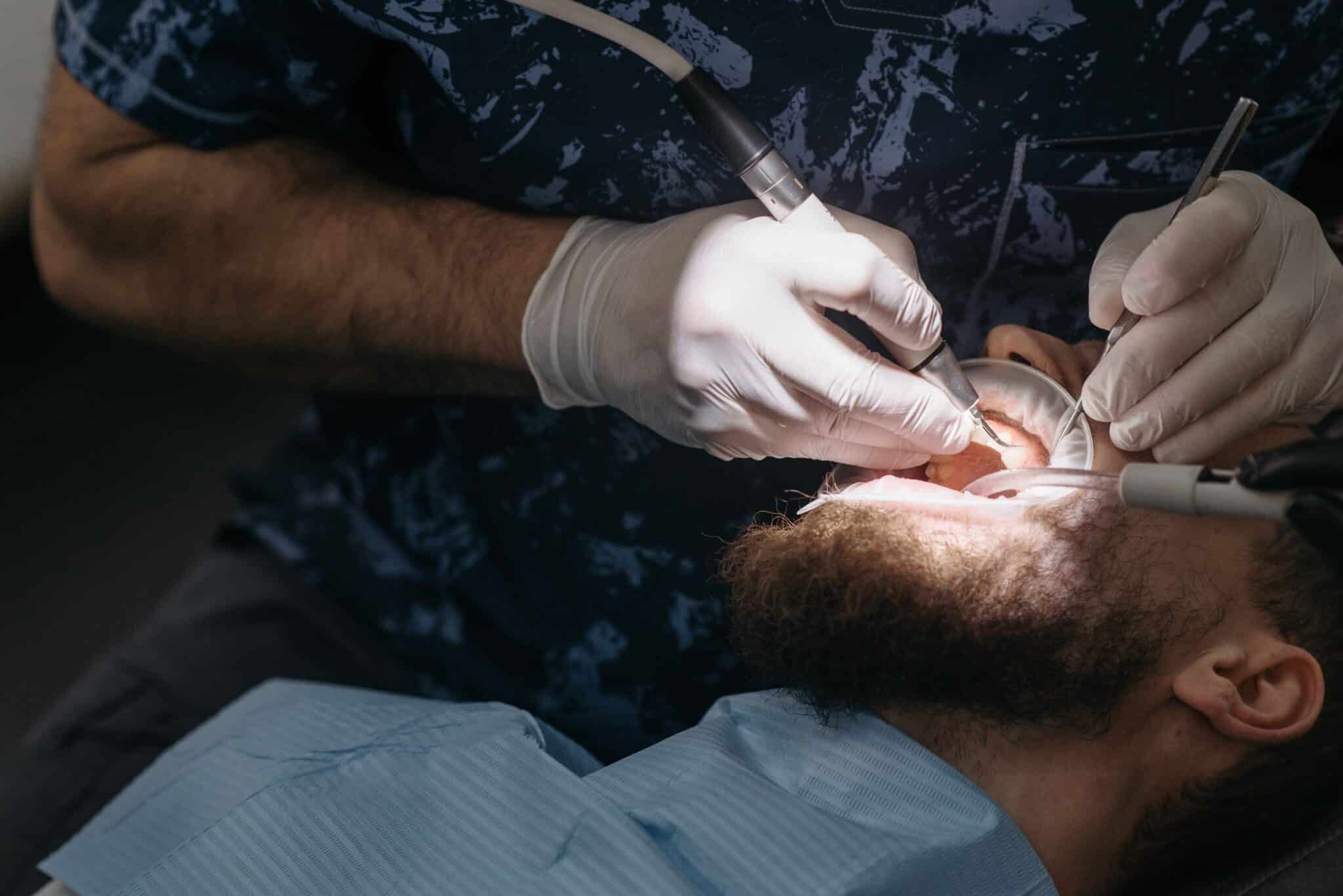
You brush your teeth every day. You floss. You don't have a toothache. So you probably don't have a cavity, right?
Not necessarily.
One of the most frustrating things about tooth decay is that a cavity can develop without causing any pain at all. You may eat normally, drink something cold, brush your teeth, and go about your day without noticing anything unusual.
Meanwhile, decay can still be progressing inside your tooth.
The good news is that finding a cavity early often means the treatment can be simpler. The important part is knowing what to look for and understanding why waiting for pain is not a reliable way to know if your teeth are healthy.
We are going straight to the point, no jargon, just clear answers.
Yes, You Can Have a Cavity Without Pain
A cavity does not automatically hurt the moment it begins.
In fact, early tooth decay can be completely silent.
A cavity develops when acids produced by bacteria gradually weaken and damage the tooth's enamel. At first, the damage may only affect the outer layer of the tooth. Since enamel does not contain nerves, you may not feel anything.
As decay moves deeper toward the inner parts of the tooth, symptoms can eventually appear.
That means you could have:
- A small cavity with no pain
- Decay between two teeth that you cannot see
- Early enamel damage without sensitivity
- A cavity underneath an existing filling
- More advanced decay that still has few symptoms

No pain does not automatically mean no problem.
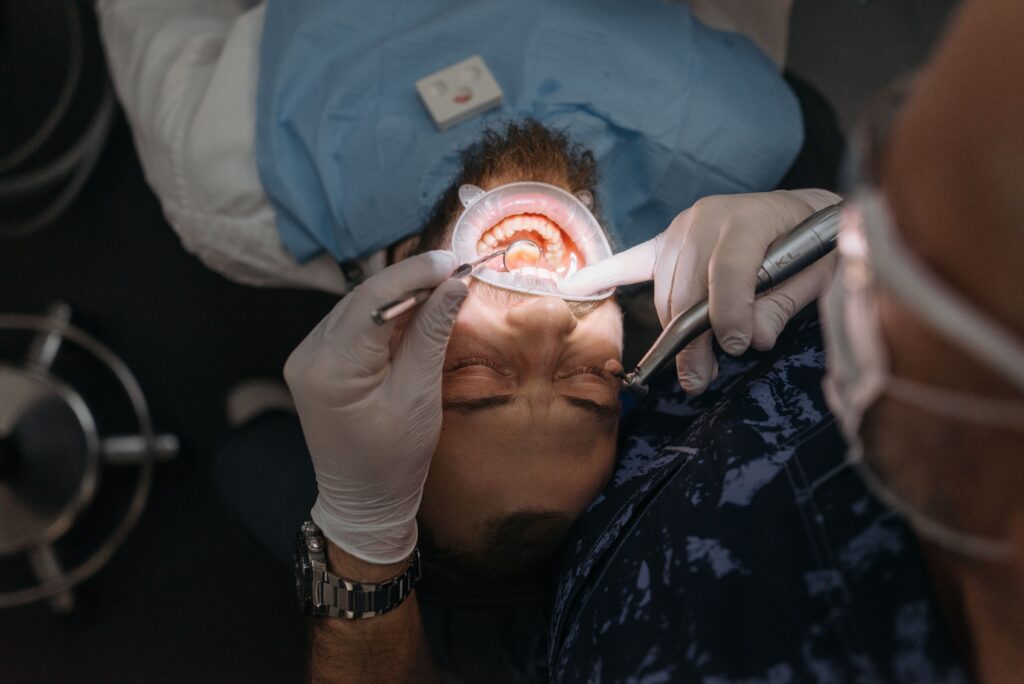
This is exactly why regular preventative dentistry matters. Routine examinations and cleanings can help identify problems before they become painful emergencies. Family Smiles specifically notes that early detection can lead to faster treatment and help prevent more serious oral problems later.
Why Don't Some Cavities Hurt?
This comes down to where the decay is located.
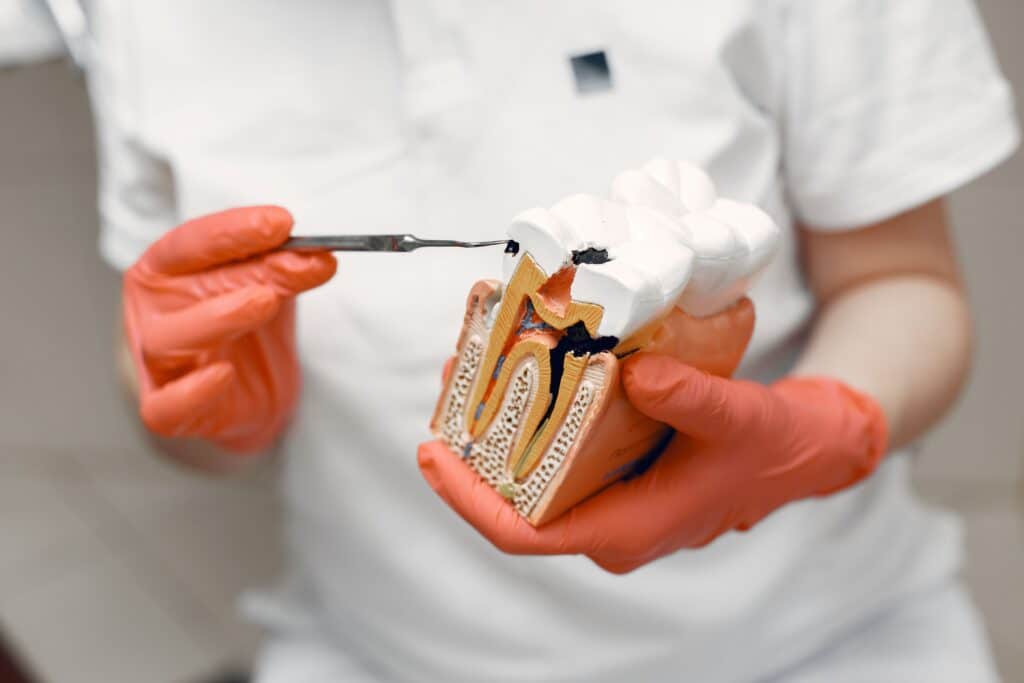
The outer layer of your tooth, called enamel, is extremely hard and does not contain nerves. Beneath it is dentin, which is more sensitive. Deeper inside the tooth is the pulp, where the nerves and blood vessels are located.
A simplified progression looks like this:
Enamel → Dentin → Pulp
When decay is limited to the enamel, you may not feel anything.
When it reaches the dentin, you may begin noticing sensitivity to cold, sweets, or pressure.
If decay eventually reaches the pulp, the tooth can become significantly painful and may require more extensive treatment.
This is why a painless cavity can eventually become a painful tooth.
The absence of pain does not mean the decay has stopped.
Cavities Between Your Teeth Can Be Especially Easy to Miss
Some cavities are easy to see. Others are not.
Decay that develops between two teeth can be especially difficult to notice because the affected area may be hidden from your view.
That is one reason dentists sometimes recommend X-rays as part of a comprehensive dental evaluation. Family Smiles explains that X-rays and scans can help identify hidden dental problems, including cracks and weakened areas.
So if you think, "My teeth look fine," remember that your mirror cannot show you everything happening between your teeth.
What Are the Signs of a Cavity If It Doesn't Hurt?
| Possible Sign | What It Could Mean |
|---|---|
| Sensitivity to Cold | One tooth reacts to ice water or ice cream. This can be caused by cavities, exposed roots, or enamel wear. |
| Sensitivity to Sweets | Chocolate, candy, or soda causes discomfort in one specific tooth. |
| Food Getting Stuck | Food repeatedly gets trapped between the same teeth, which may indicate an area that needs to be checked. |
| Dark or White Spot | A visible change in the tooth may indicate enamel damage or decay. |
| Rough or Sharp Area | A new rough edge or unusual spot that your tongue keeps noticing should not be ignored. |
| Bad Taste or Breath | Persistent odor or an unusual taste can sometimes be related to plaque, gum problems, or untreated decay. |
Why Waiting for a Toothache Can Backfire
This is where many people get caught.
They think:
"It doesn't hurt, so I'll wait."
Then months later, the tooth starts hurting. By that point, the cavity may have progressed significantly. A small cavity that could have been treated with a relatively conservative restoration may eventually require more extensive treatment if the decay continues.
Family Smiles offers general and cosmetic dentistry that includes restorative services such as crowns, partial crowns, and other treatments for damaged or decayed teeth.
If you are waiting for pain before scheduling your next dental visit, don't.
Can a Dentist Find a Cavity Before It Hurts and How Often Should You Get Checked?
Yes. Regular dental examinations can help identify cavities and other problems before they cause noticeable pain. Your dentist can examine your teeth and gums and use X-rays or other diagnostic tools when needed.
The timing of your visits depends on your individual needs, including your cavity history, oral hygiene, diet, age, gum health, existing dental work, and risk of tooth decay. While many patients are advised to have an examination and cleaning every six months, some may need more frequent visits.
| What Your Dentist Checks | Why It Matters |
|---|---|
| Teeth and enamel | Helps identify early signs of decay or damage. |
| Gums | Checks for inflammation, bleeding, or other gum problems. |
| Hidden areas | X-rays can reveal cavities that are difficult to see during a visual exam. |
| Previous dental work | Existing fillings, crowns, and other restorations may need monitoring over time. |
| Your cavity risk | Your dentist can recommend how often you should come in based on your individual needs. |
What Happens If a Painless Cavity Is Found?
Don't panic.
Finding a cavity does not automatically mean you need a root canal or major dental procedure.
The treatment depends on how large and deep the cavity is.
For a cavity that has progressed enough to require restoration, your dentist may recommend a filling. Family Smiles' general and cosmetic dentistry services include treatments for tooth decay and damaged teeth.
If the tooth has lost a significant amount of structure, a crown may be considered to protect and restore it. Family Smiles offers CEREC crowns designed to restore damaged teeth while matching their natural appearance.
The earlier the problem is identified, the more likely it is that your dentist can address it before it becomes a much larger issue.
How Can You Prevent Cavities From Developing?
| Stage of Decay | Possible Treatment | What It Means |
|---|---|---|
| Early enamel damage | Preventive care and monitoring | Very early changes may be managed before they develop into a larger cavity. |
| Small to moderate cavity | Filling | The decayed portion is removed and the tooth is restored with a filling. |
| Significant tooth damage | Crown | A crown may be recommended when too much of the tooth has been weakened to support a regular filling. |
| Deep or advanced decay | More extensive treatment | If decay reaches the inner part of the tooth, additional treatment may be necessary depending on the condition of the tooth. |
What You Can Do Right Now
If you currently have no tooth pain, that's great.
But don't use that as proof that everything is perfect.
Instead:
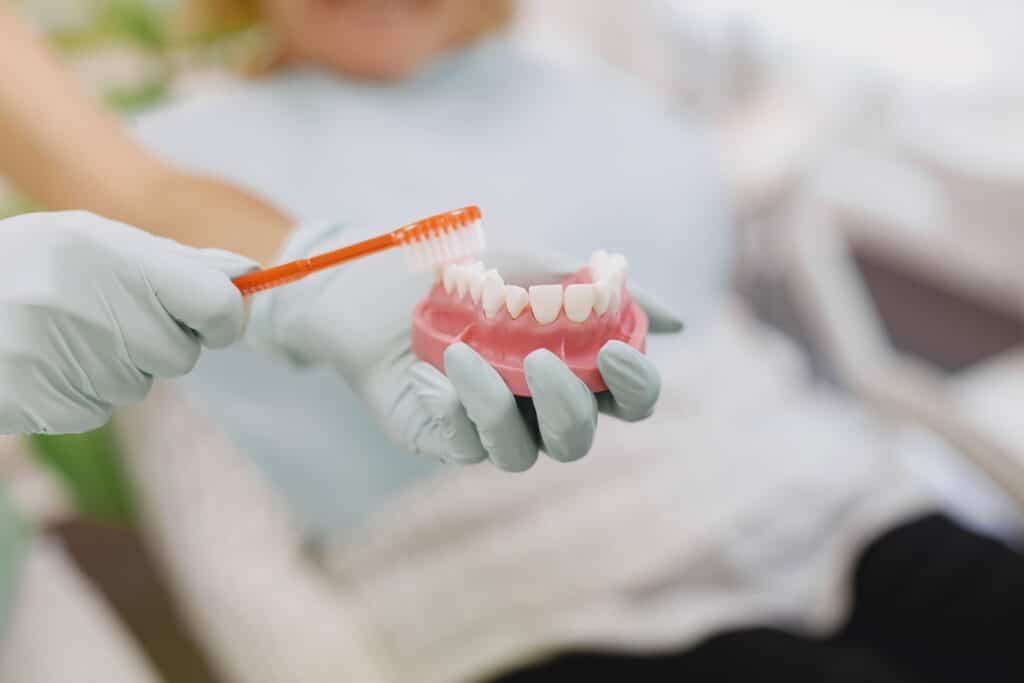
- Keep brushing twice a day with fluoride toothpaste.
- Floss at least once a day.
- Limit frequent sugary snacks and drinks.
- Pay attention to new sensitivity or changes in your teeth.
- Keep your regular dental examinations and cleanings.
- Ask about X-rays when your dentist recommends them.
And if you haven't been to the dentist in a long time, don't wait for your first toothache to be the reason you go back.
A simple dental checkup can help determine what's actually happening inside your mouth.
Final Thoughts: No Pain Doesn't Always Mean No Cavity
One of the biggest mistakes people make with their teeth is assuming that a healthy smile should always announce its problems with pain.
Unfortunately, cavities don't always work that way. A cavity can develop quietly, hide between teeth, and continue getting deeper without causing a noticeable toothache.
You don't have to wait until something hurts to find out if something is wrong.
Have questions or ready to book your next visit?
Contact us today—we'll help you identify the cause and get your breath fresh again.