


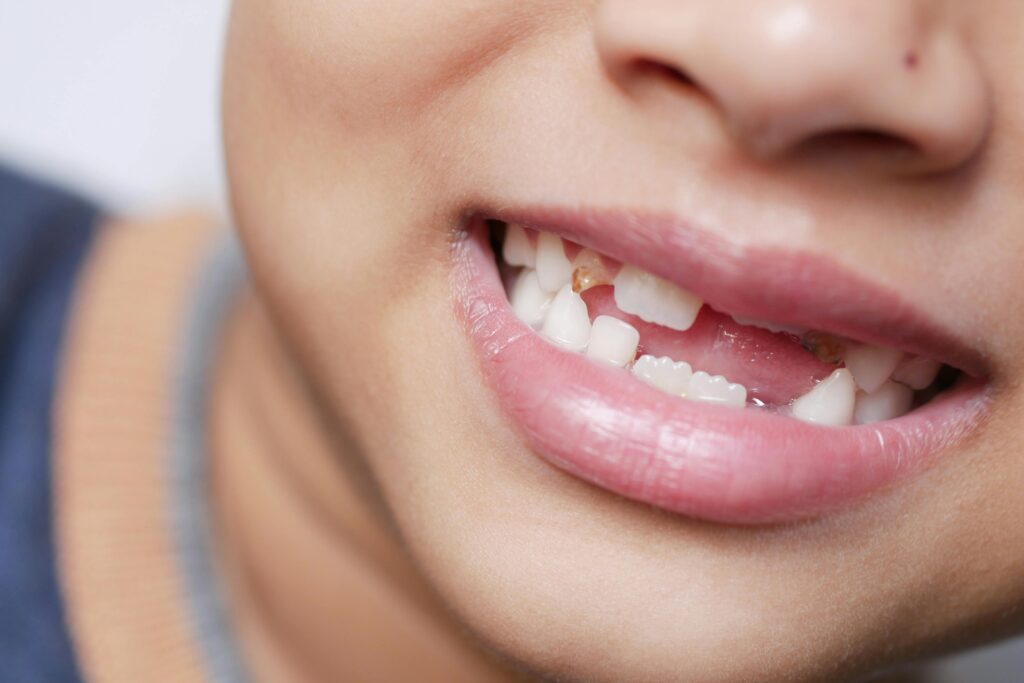
You should know that CAVITIES in baby teeth are very common, but treatable; they shouldn’t be ignored.
Even though these teeth will eventually fall out, they play critical roles in chewing, speech, jaw growth, and holding space for adult teeth. Untreated decay can spread quickly through thinner baby enamel, causing pain, infection, or early tooth loss that affects the permanent smile.
So what SHOULD YOU DO if this happens?


Let's discover it!
Step 1: What To Do Today
If your child just complained of a “zing” with sweets or cold, or you noticed a dark spot:
- Look, don’t poke. Check gently with good light. Avoid toothpicks or metal tools that can worsen a soft spot.
- Clean the area tonight. Brush thoroughly and floss around the sensitive tooth.
- Use age-appropriate pain control only if needed. A cool compress can help. If pain becomes constant, throbbing, or your child wakes at night, that’s urgent act now.
- Book a prompt exam. The fastest way back to comfort is a same-week visit for pediatric dentistry.

Treatment Options for Cavities in Baby Teeth
The plan depends on your child’s age, the size and location of the cavity, symptoms, and cooperation level. Here are the most common paths your dentist may discuss:
| Treatment option | When it’s used (short) | Helpful link(s) |
| 1) Remineralization & Protective Coatings (Very Early Spots) | Chalky white areas or very shallow decay without pain; stop early progression with focused home care + in-office fluoride during preventative dentistry | preventative dentistry |
| 2) Tooth-Colored Fillings (Small to Moderate Cavities) | Enamel is breached; remove softened tooth structure and restore with bonded material that blends naturally under general & cosmetic dentistry | general & cosmetic dentistry |
| 3) Pediatric Crowns (Large Cavities on Baby Molars) | Several sides weakened or large decay; full coverage protects the tooth until it sheds; see adult coverage info under crowns & bridges | crowns & bridges |
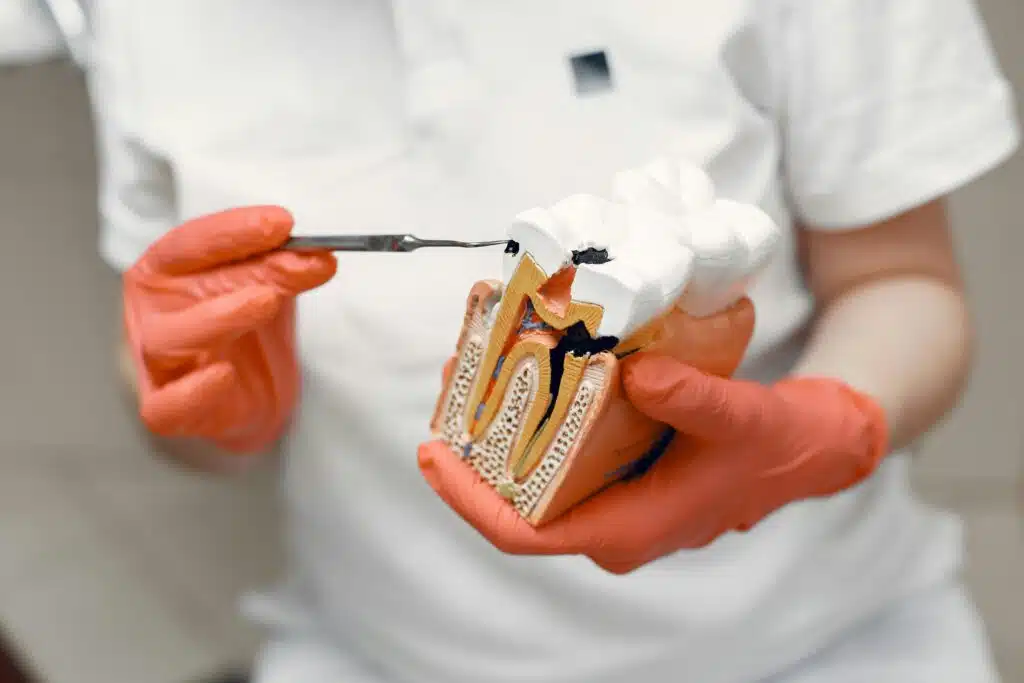
| 4) Nerve Treatment for Baby Teeth (Decay Reaches the Pulp) | Treatment options | root canal therapy |
| 5) Extraction — And Why Space Matters | Tooth is too broken down to save; quick tooth extraction ends pain/infection; consider a spacer via pediatric dentistry to preserve room for the adult tooth. | tooth extraction, pediatric dentistry |
“Do We Really Have To Fix It If It Doesn’t Hurt?”
Yes, waiting for pain is a mistake. Pain in baby teeth often means the cavity is already deep. Early treatment keeps procedures small, short, and comfortable. Delays can turn a quick filling into nerve treatment or an extraction, which means more visits, more cost, and more disruption for your child. If you’re unsure how fast to move, schedule pediatric dentistry for a clear, case-by-case plan.
A Parent’s Prevention Plan (That Actually Works)
You can dramatically reduce the chance of new cavities with a few high-leverage changes:
1) Timing Beats Tally: Stop All-Day Sipping and Grazing
Every exposure to sugars (including juice, chocolate milk, sports drinks, sticky snacks) triggers a 20–30-minute acid attack. If your child sips all day, you must stop this RIGHT NOW. Move sweet drinks and treats to mealtimes; between meals it’s water only.
Reinforce the basics during preventative dentistry visits your hygienist can personalize a plan.

2) Brush and Floss the Smart Way
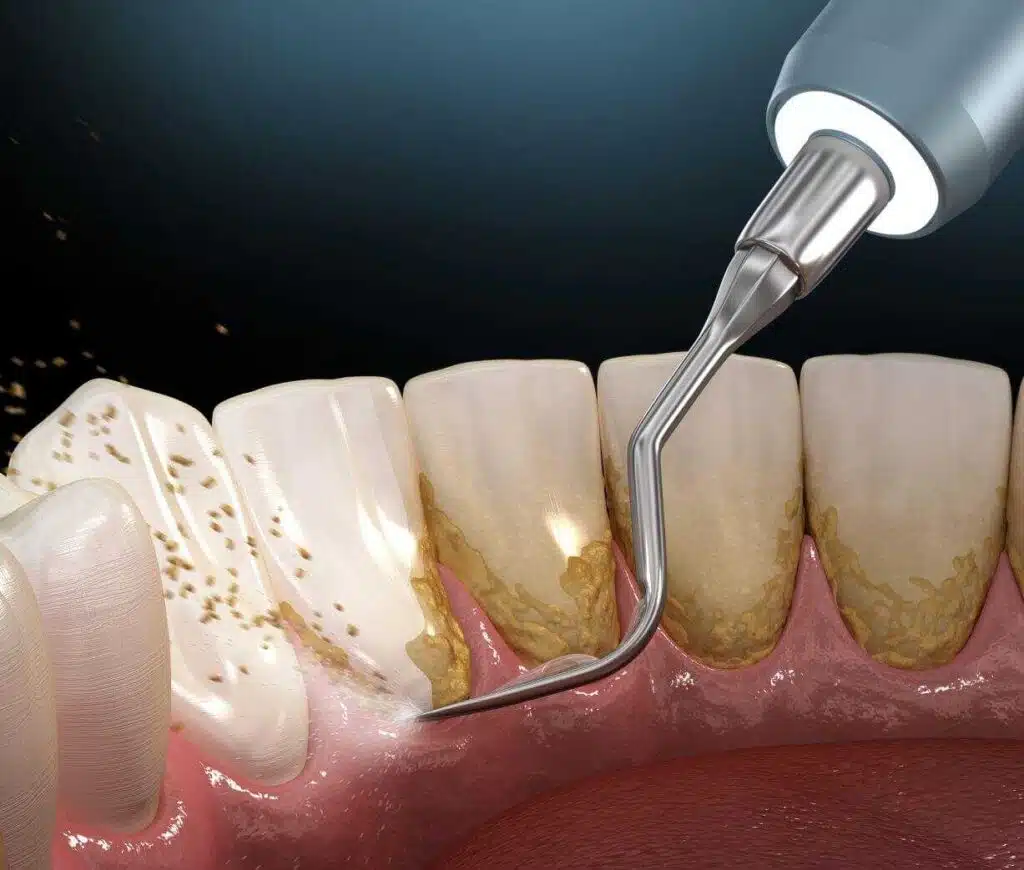
Brush twice daily with fluoride toothpaste: rice-sized smear under 3; pea-sized at 3+.
Floss once a day anywhere teeth touch.
Supervise brushing until your child can thoroughly clean every surface—often until age 7–8.
3) Fix Food Traps and Rough Edges
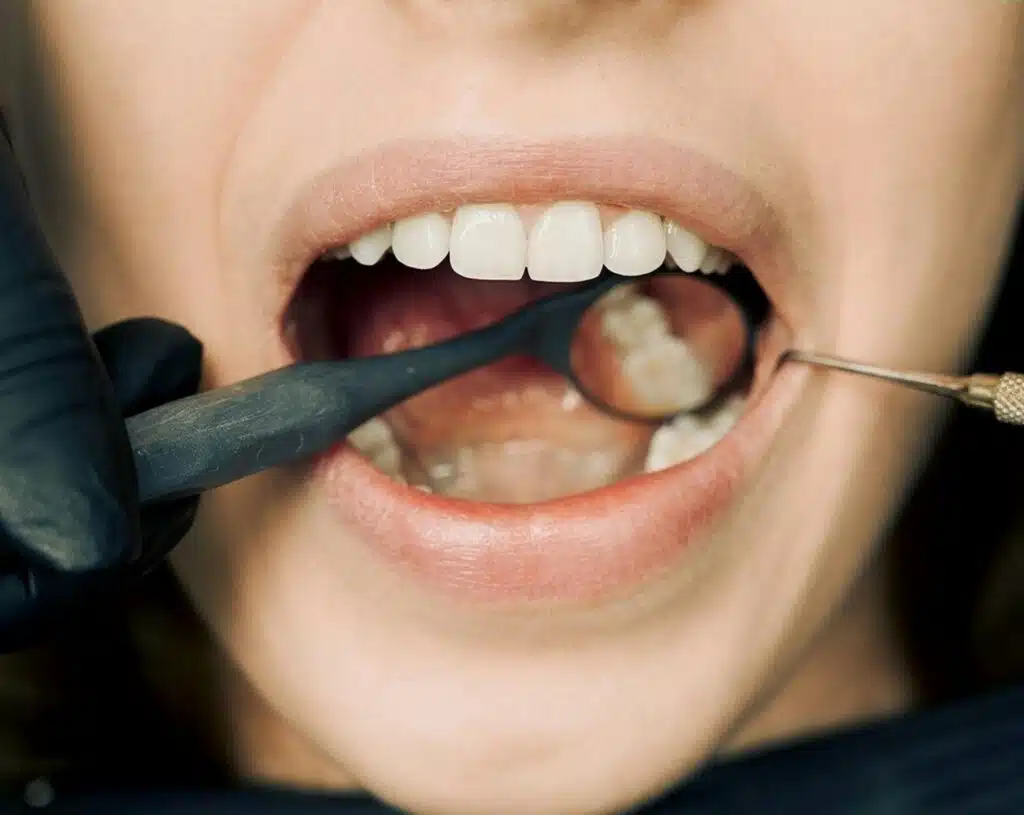
If food always catches in one spot or floss shreds, mention it. Small shaping or a quick bonded repair under general & cosmetic dentistry can remove the trap that keeps re-seeding decay.
4) Protect Alignment as They Grow
Crowded baby teeth are hard to clean; that can snowball into more cavities. Your dentist will monitor spacing during pediatric dentistry and advise if an orthodontic check is helpful later. Clear communication now prevents bigger bite issues down the line.
FAQs Parents Ask (Quick Responses)
Will fillings in baby teeth fall out when the tooth falls out?
Yes—restorations leave with the tooth. The goal is to keep the tooth comfortable and functional until its natural “due date.”
Are silver crowns the only option for kids?
Your dentist will suggest the best material for strength and cavity risk. Some cases allow white-colored options; others require metal for durability. The priority is protecting the tooth pain-free until it’s ready to shed.
My child is nervous. Can treatment be made easier?
Yes. Visits are designed for kids, with tell-show-do explanations and desensitizing approaches. For longer procedures, your dentist may discuss additional comfort options during pediatric dentistry.
Will sugar-free snacks solve the problem?
They help, but frequency still matters. Cluster treats with meals and keep water between meals.

Final Thoughts: Treat the Cavity, Protect the Future
With timely diagnosis, a simple, kid-friendly fix, and a few high-impact habit changes, your child can get comfortable fast and stay that way.
A cavity in a baby tooth is not a parental failure, and it’s not the end of a healthy smile.
Have questions or ready to book your next visit?
Contact us today—we'll help you identify the cause and get your breath fresh again.